This was a cross-sectional, observational-analytic study aimed to assess the reliability and usability of the RVF100 compared to the Humphrey Visual Field Analyzer (HFA). A total of 46 patients participated in this study, consisting of 17 males and 29 females, with ages ranging from 23 to 83 years and a mean age of 51 years.
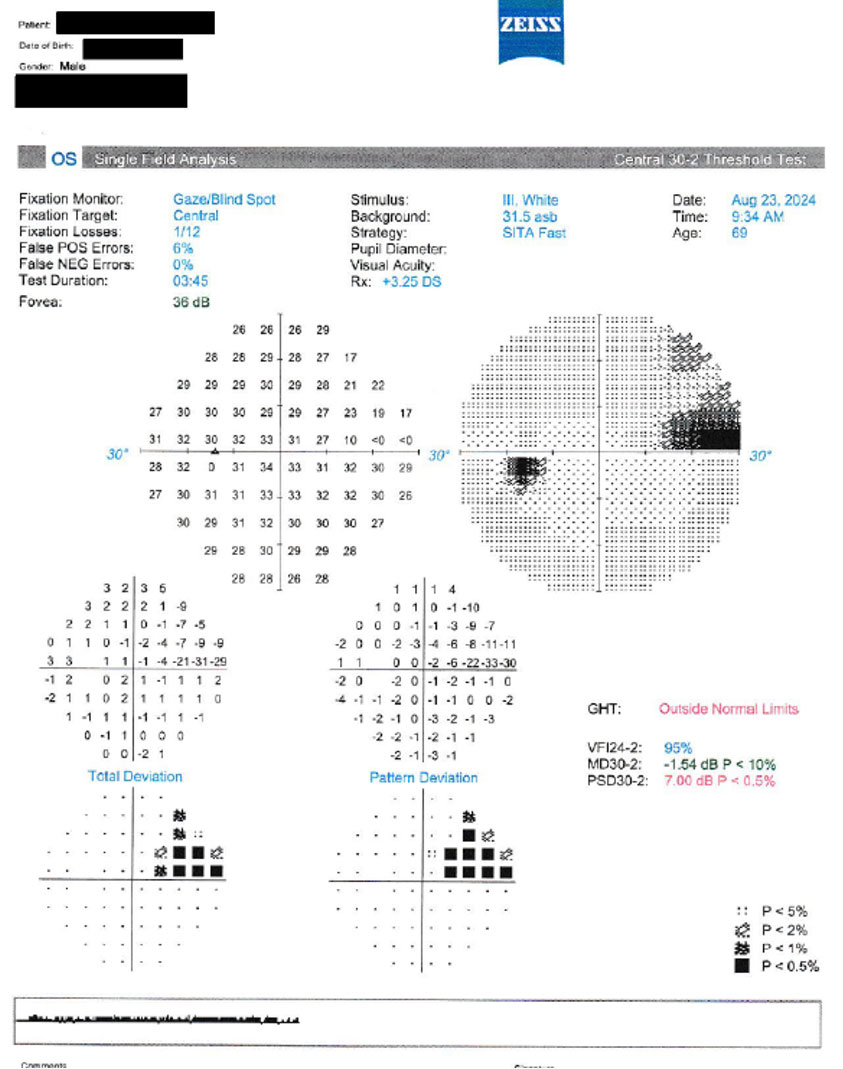
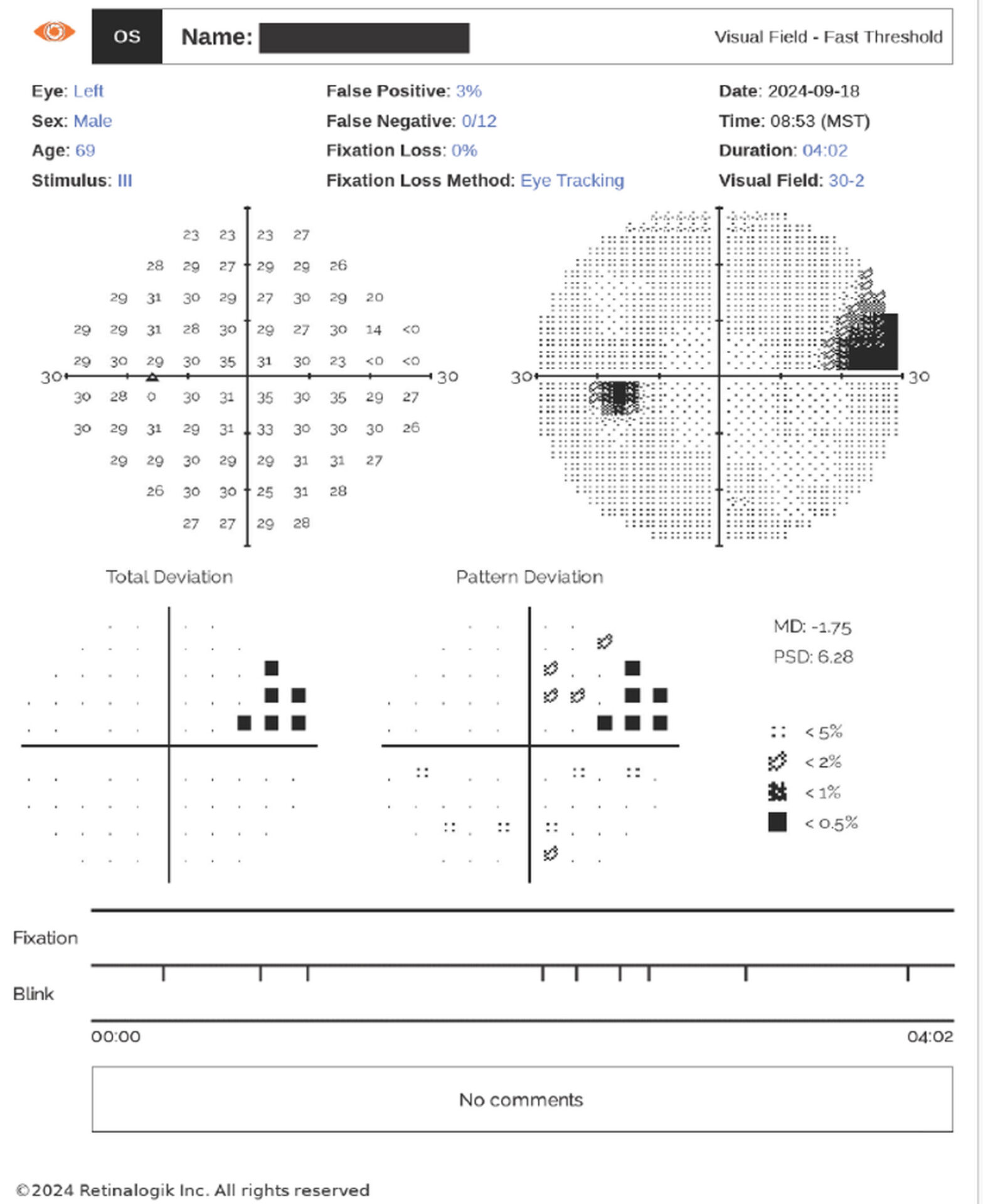
The study included 76 eyes (37 left eyes [OS] and 39 right eyes [OD]), of which 49 were normal, 19 were glaucomatous, and 8 had other diagnoses, including optic neuritis (ON) and ocular hypertension (OHT). The mean MD was −3.49 dB for HVF and −2.83 dB for VRP in our total sample. Mean deviation (MD) values ranged from +2.01 to −31.99 dB for HVF and +2.67 to −31.51 dB for VRP.
The RVF100 demonstrated strong agreement with the HVF, with high correlations for MS (r = 0.978), MD (r = 0.979), and PSD (r = 0.837). Pointwise comparisons of light sensitivity revealed a mean difference of 1.5 dB for all eyes, 2.00 dB for glaucomatous eyes, and
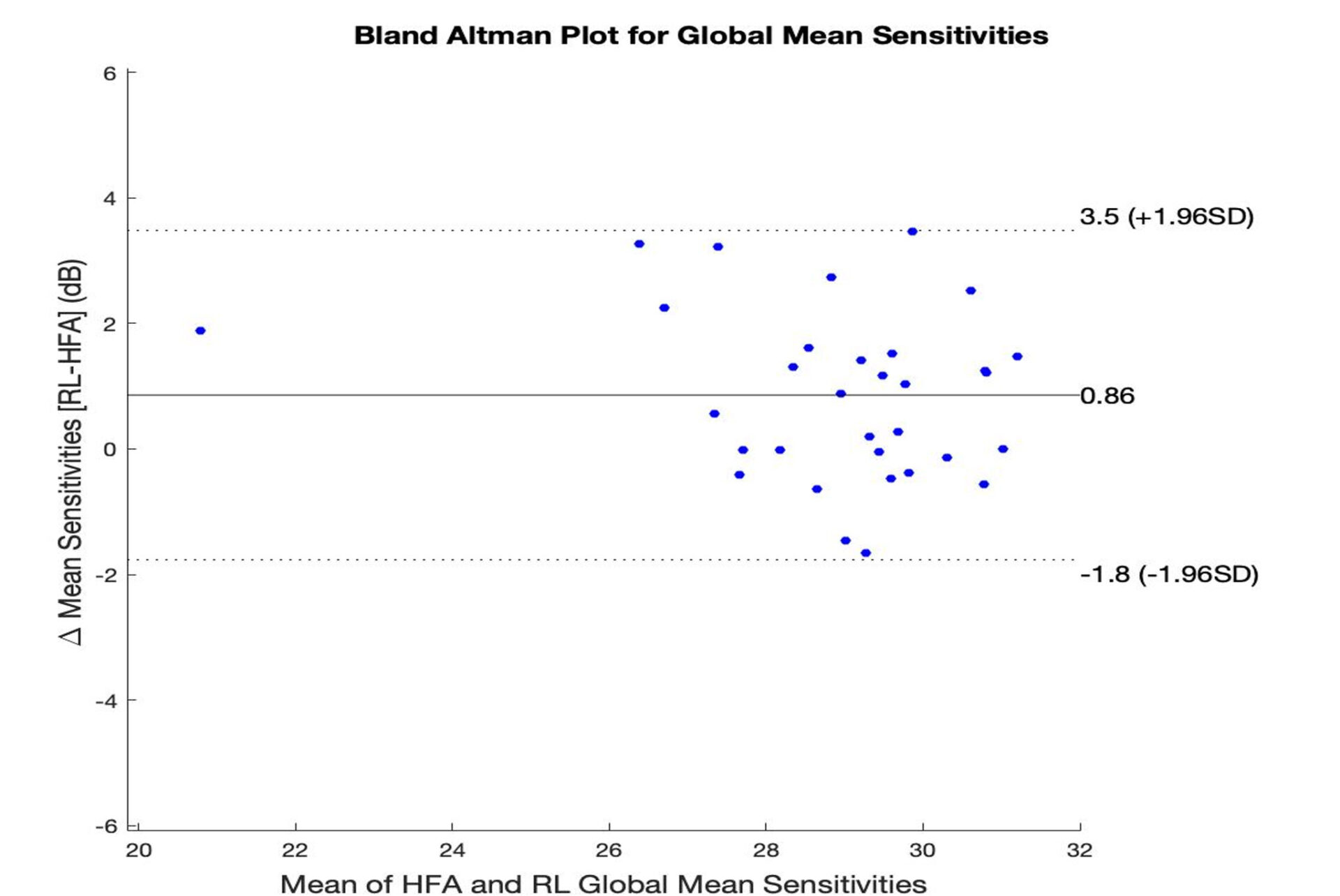
1.64 dB for eyes with other diagnoses. The Bland-Altman analysis in our study showed a minimal difference in sensitivity, with a mean bias of -1.06 dB (95% CI: −4.2 to 2.0) across all eyes, −1.63 dB (95% CI: −4.8 to 1.6) for glaucomatous eyes, and −1.19 dB (95% CI: −4.2 to 1.8) for eyes with other diagnoses.