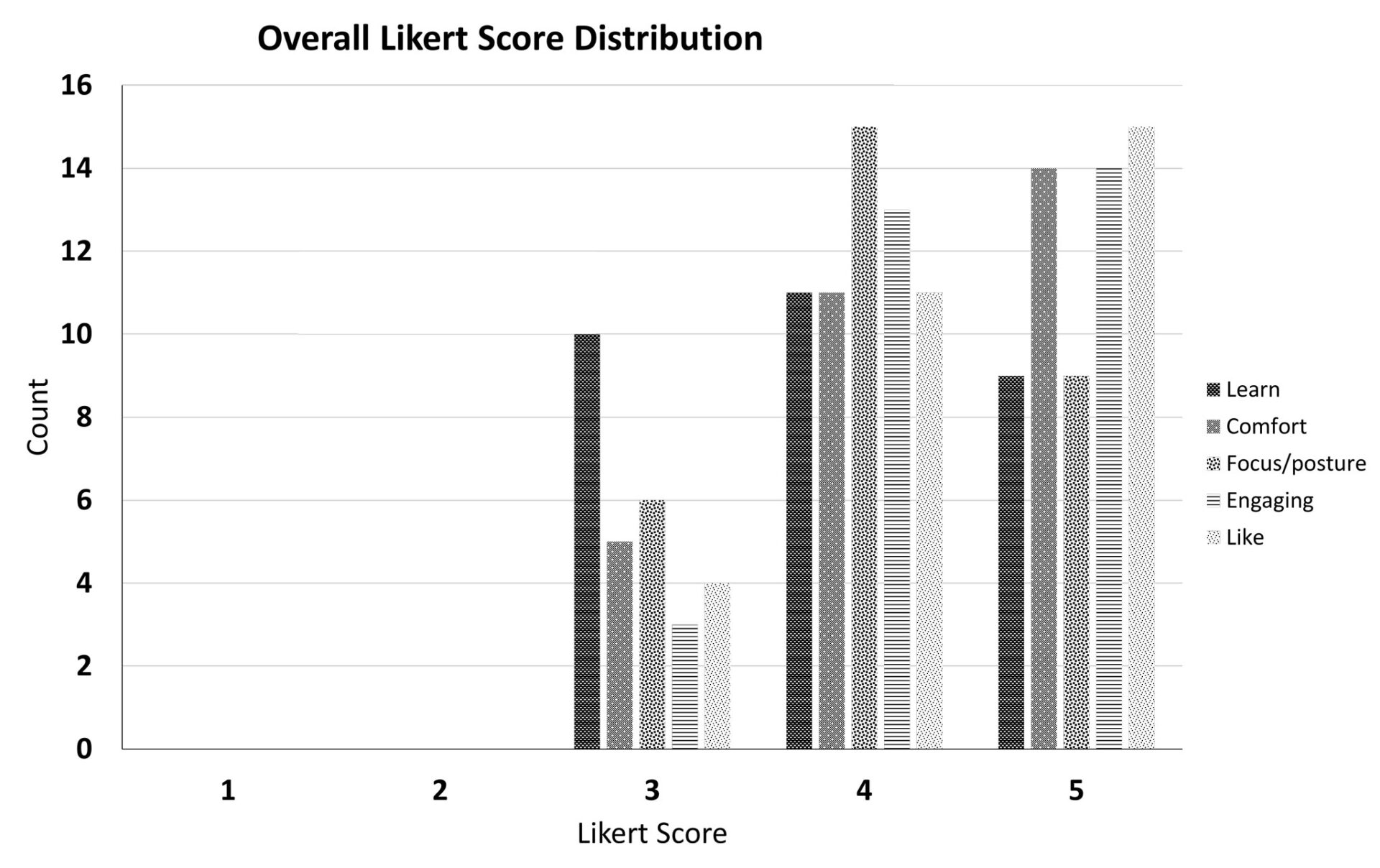
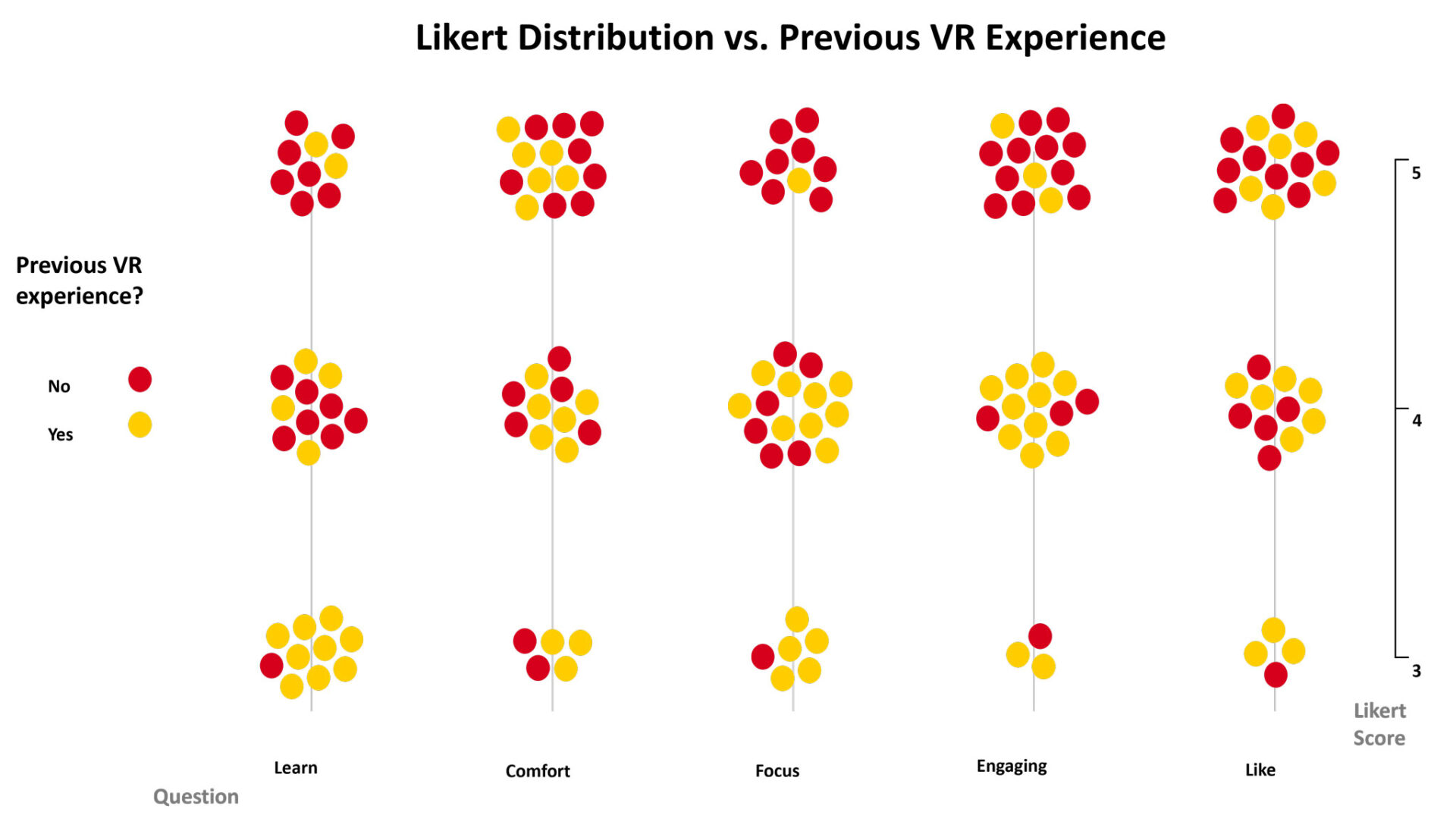
This study explores the user experience of patients undergoing visual field testing using a Virtual Reality Perimeter (VRP) compared to the conventional table-mounted Humphrey Field Analyzer (HFA). Conducted on 30 glaucoma-suspect patients, each subject was tested on both devices, and their experiences were rated across five usability domains using a 5-point Likert scale.
30 (Mead aga 64.43 with SD 12.20) glaucoma suspects tested on each eye, on a validated VRP (Retinalogik RVF100) and the HFA
Key findings
All patients preferred the VRP over the HFA on all usability measures:
- Learning curve (mean = 3.97)
- Comfort (mean = 4.30)
- Focus (mean = 4.10)
- Engagement (mean = 4.37)
- General preference (mean = 4.37)
- No patient favored the HFA (range of all measures: [3-5]) .
New VR users showed significantly stronger preference for VRPs in terms of learning curve, focus, and engagement. Prior visual field experience or eyeglass use did not significantly affect preference.
Conclusion
VR-based perimetry offers a significantly better user experience, independent of age or prior exposure. It is particularly promising for patients who struggle with table-mounted systems due to discomfort, posture issues, or mobility constraints. VRPs are positioned as a practical and validated alternative to traditional perimetry in clinical settings.
Link – P439: https://www.nanosweb.org/files/Final_NANOS_2024_Syllabus_with_Answers(1).pdf